AI can make your ad in an afternoon. Here's what it can't put in it in the UAE
AI will generate a public figure, a national symbol or an Emirati presenter without blinking. It will not tell you whether you can publish the result. What the UAE rules say, what we learned making Rashid for the Government of Ajman, and seven questions to ask first.
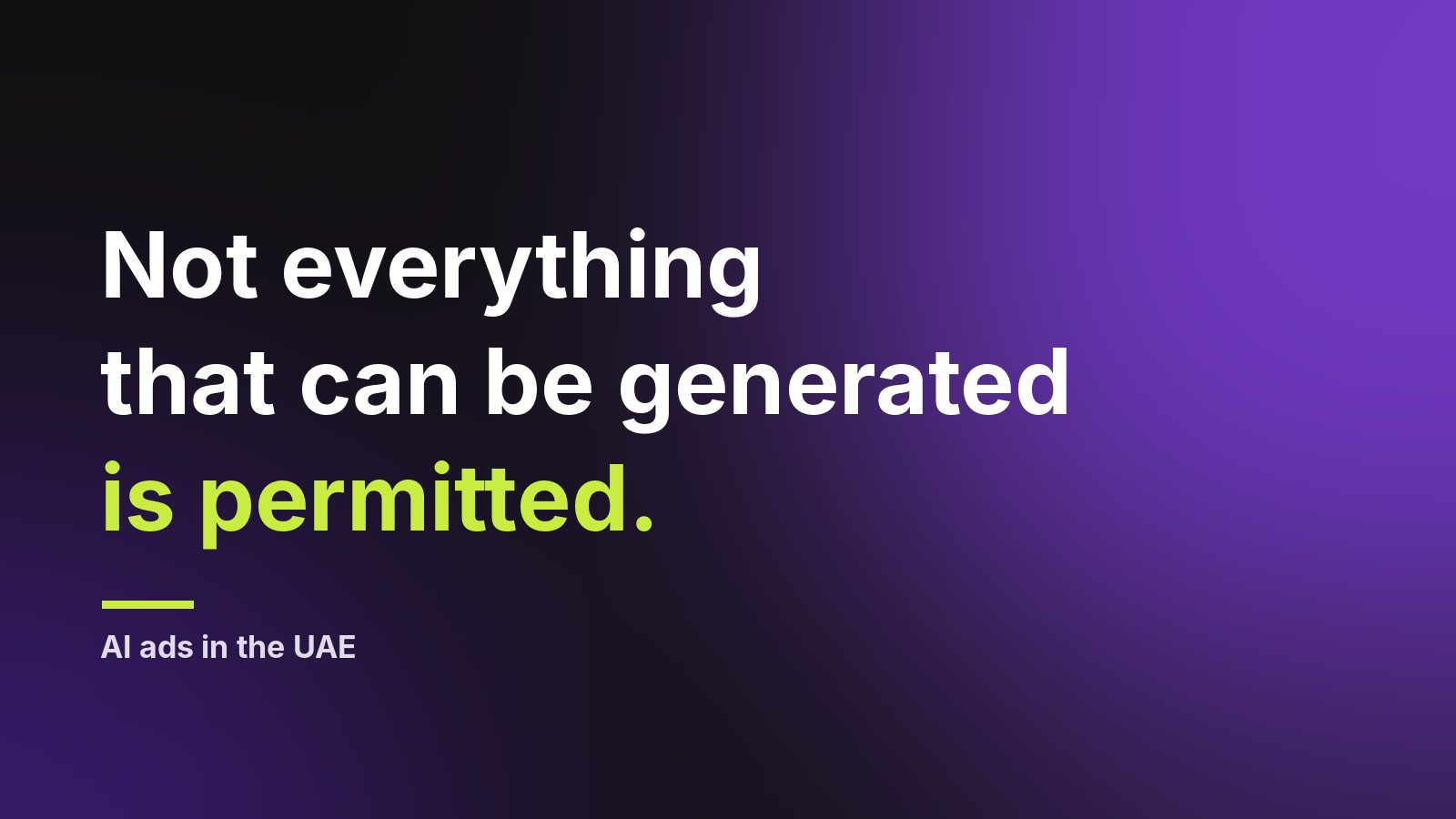
Not everything that can be generated is permitted
That line is not ours. It comes from the UAE National Media Authority, in a published warning at the end of September, and it should be pinned above every marketing team using AI this year. The tools have made it possible to produce an ad in an afternoon. They have not changed what that ad is allowed to show. A prompt box will happily give you a public figure, a national symbol or an Emirati presenter. It will not tell you whether you can publish the result. That part is still your job, and if a production company is making the film, it is theirs too. We make AI video and we recommend it when it suits the brief, as we explained in what we have actually used AI for. This article is about the other side of that conversation: the things we check before anyone generates a frame. It is practical guidance from a production company, not legal advice.
What the rules actually say
Four points matter most for an AI ad. First, using AI to generate images or videos of national symbols or public figures without prior official approval breaks the Media Content Standards. Second, in advertising and promotional content, the Emirati national dress is reserved for Emirati citizens. Third, the authority has objected to non-Emiratis using a broken or exaggerated Emirati dialect to sell products. Fourth, the dirham is treated as a protected national symbol, so using it in a way that mocks, trivialises or misrepresents it can also cause problems. None of these rules are about AI as a technology, apart from the first. That is the trap. They are about what appears on screen, and they do not stop applying because no camera was involved. The published guidance does not spell out every AI situation, including how the dress rule treats a generated character. So the sensible assumption is the cautious one: if you could not do it with a real person in an ad, do not assume a generated person makes it fine. If the answer matters to your campaign, ask the authority or a lawyer before you make it, not after.
The request we have already had
This is not theoretical. We have had a client ask for a real person or leader in a video, and it did not go ahead as asked. We will not go into the details of that project. With AI, a request like that no longer sounds like a big production problem, so it can sound like a small creative idea. It is not small. Approval has to come before the content exists. So the choice is simple: find another way to tell the story, or get the approval first.
Rashid: what took the most care
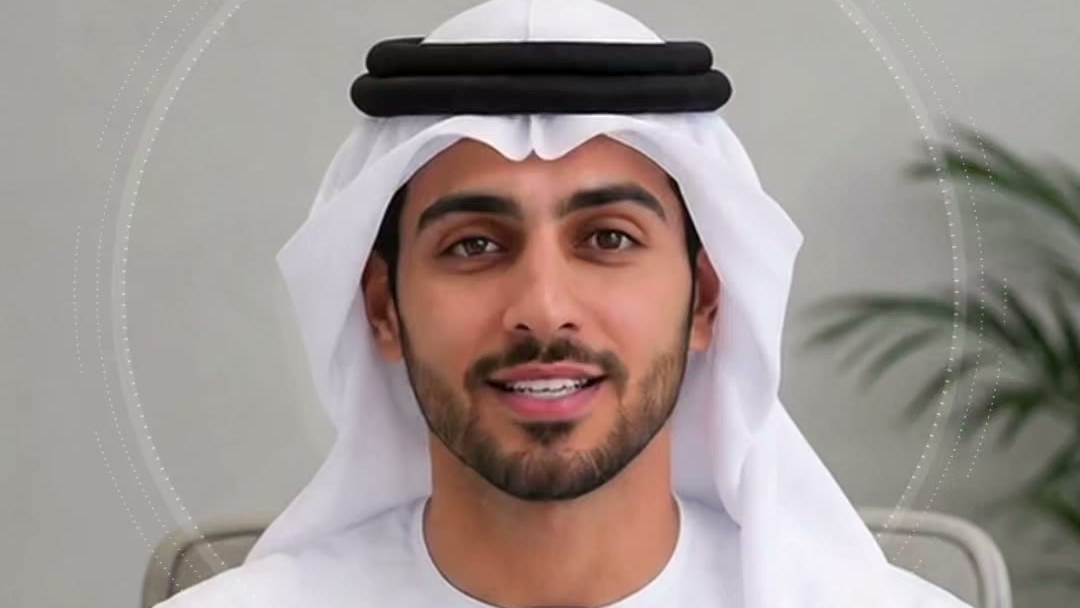
When we made Rashid, the AI assistant for the Government of Ajman's Department of Legal Affairs, what took the most care compared with a normal shoot was his accent and the way he was dressed. Whether he sounded right, and whether he looked right for the department he was representing, took the real attention. This was a government department speaking in its own name, with its own script, which is a very different situation from a brand borrowing a local character to sell something. But it taught us what to look at first on any AI film made for this market. Dialect and voice-over have changed decisions on our projects too, because in Arabic the viewer hears a wrong note immediately. If you are making content in two languages, our notes on bilingual social content cover the same ground from the other direction.
The four mistakes we see in UAE AI ads
Asked which mistake we see most, our honest answer is all four. The Arabic sounds wrong: a voice or dialect that no real person here would use. The people look fake: faces and movement that give the method away. It looks generic: a film that could belong to any brand in any city. And it ignores local culture: the wrong dress, setting or tone for the audience it is meant to reach. Notice that only one of those is mainly a technology problem. The other three are decisions. A person chose that voice, approved that setting and signed off that script. AI makes it faster to reach a finished-looking film, which makes it easier for those decisions to go unchecked. That is usually where the damage happens, because a finished-looking film feels like an approved one.
Seven questions before you generate anything
Run these before the first prompt, not after the last revision. One: does the film show a public figure, or anyone who looks like one? Two: does it show a national symbol, including the flag or the dirham? Three: does any character wear Emirati national dress? Four: does any voice use Emirati dialect, and who is that voice meant to be? Five: has a native speaker of that Arabic listened to the voice-over? Six: does whoever is publishing it hold an Advertiser Permit? The requirement covers promotional content on social media, websites and blogs, paid or unpaid, and organisations have to check that the advertisers they work with hold one. Seven: if a platform asks you to label the film as AI, have you done it? A label tells viewers how the film was made. It does not give you approval for what is in it. If any of the first four answers is yes, stop and get advice before anything is generated. Changing the brief at that point costs an email. Changing it after the film is finished costs the film.
Send us the brief before you open the tool
If you are planning an AI film, send us the script or the idea through our contact page before anyone starts generating, and we will tell you where we would be careful. If the answer is that the film needs a real person after all, that is ordinary corporate video work, and we will say so.